
ServicesMortgage Refinance
Mortgage Refinance in South Fulton
A refinance replaces your current mortgage with a new one. We tell you plainly whether a lower rate, a shorter term or a switch to a fixed rate actually saves money once closing costs are counted, and how many months it takes to break even.
What a rate-and-term refinance does
In a rate-and-term refinance, a new loan pays off the old one and you keep roughly the same balance. What changes is the interest rate, the length of the loan, the loan type, or all three. You are not taking cash out; if you want to pull equity, our Cash-Out Refinance page covers that loan.
The reason to do it comes down to arithmetic. A refinance has closing costs: lender fees, an appraisal in most cases, title insurance and the closing attorney, plus prepaid interest and a fresh escrow deposit. If the new monthly payment or the total interest saved does not recover those costs before you expect to sell or refinance again, it is the wrong move. We run that number first and tell you which way it falls.
Good reasons we see often: the market rate has dropped meaningfully below your note rate, an adjustable-rate loan is about to reset, you want to drop FHA mortgage insurance by moving to a conventional loan, or your income now supports a 15-year term.
What we handle on a refinance
Break-even analysis
We take your total closing costs and measure them against what you save each month, which tells you how long until the refinance has paid for itself. We also compare total interest left on the old loan with the new one, because a lower payment on a fresh 30-year term can still cost more overall.
Loan type comparison
Conventional, FHA streamline and VA rate-reduction options each have different paperwork, appraisal rules and insurance costs. We lay out which ones you qualify for and what each one changes.
Rate and points options
Discount points lower the rate but add to what you pay at closing. We show the no-points rate and the points rate side by side, plus how long you would need to keep the loan before the points earn their cost back.
Mortgage insurance review
If your equity has grown, moving from an FHA loan to a conventional one can remove monthly mortgage insurance. We check your likely loan-to-value against the threshold before you pay for an appraisal.
Coordination through closing
We order the appraisal and title work, get the payoff figure from your current servicer and schedule the closing with the attorney. Georgia closings are run by an attorney, and we make sure you see the final figures before you sit down to sign.
Signs a refinance is worth a look
Your rate is well above today's
A small rate gap rarely covers closing costs. A larger gap on a sizable balance often does. Tell us your note rate and balance and we will say which side you are on.
An adjustable rate is about to reset
ARM loans reset to an index plus a margin after the fixed period ends. If the new rate would raise your payment, locking a fixed rate now removes that exposure.
You are paying FHA mortgage insurance
On many FHA loans the monthly premium never drops off, no matter how much you pay down. Once your equity is high enough, switching to a conventional loan can stop that charge.
Your income has gone up
A higher, steadier income may support a 15- or 20-year term. The payment rises, but you build equity faster and pay far less total interest.
Your credit score has improved
Rates are priced in credit score tiers. Moving up a tier or two since you closed can change the rate you are offered.
Refinance steps, start to finish
- 1
Free consultation
You pick a time and a loan officer phones you then. Keep your latest mortgage statement nearby so we can read the balance, rate, term and any mortgage insurance.
- 2
Numbers in writing
We send a Loan Estimate showing the rate, every closing cost line and any cash needed at closing. The break-even month comes with it, and you decide whether to go ahead.
- 3
Paperwork and appraisal
We will ask for recent pay stubs, your last two years of W-2 forms or full returns if you are self-employed, and a couple of months of account statements. We also need proof of your current hazard coverage, usually the one-page summary your insurer sends at renewal. An appraiser visits if one is required; some streamline programs skip this step.
- 4
Underwriting and rate lock
Underwriting verifies income, assets, credit and the property value. We lock your rate when you approve it and keep you posted on conditions as they come in.
- 5
Closing and payoff
You sign with the closing attorney, at their office or with a mobile notary if arranged. Federal rules give you a three-day right to cancel on most primary-residence refinances, after which the new loan funds and pays off the old one.
What moves the cost of a refinance
Your rate and closing costs come from the loan and from your own file, not from one posted number. These inputs move them the most. Each one shows up as its own line on your Loan Estimate, so nothing gets buried in a total.
- Credit score and loan-to-value
- Lenders price risk by score tier and by the share of the property you own outright. Higher scores and lower loan-to-value ratios earn better pricing, and crossing a single threshold can shift the rate more than most people expect.
- Points versus lender credits
- Paying points up front buys the rate down. Going the other way, you accept a rate a notch higher and the lender covers part of your closing costs. The right choice depends on how many years you expect to keep this mortgage.
- Title, attorney and recording charges
- A refinance needs a new lender's title policy, a closing attorney's fee and county and state recording charges. These go to third parties, and we itemize each one.
- Escrow and prepaid interest
- Your new loan usually needs a fresh escrow deposit for taxes and insurance, and interest is prepaid from the closing date to month-end. The prior servicer refunds your old escrow balance afterward, which offsets part of this.
Mortgage refinance questions
Something not covered here? (404) 671-4981
How soon after buying can I refinance?
Many conventional rate-and-term refinances have no fixed waiting period, though some lenders and loan types set one. FHA and VA streamline programs require a set number of on-time payments first. We check the rule for your current loan on the first call.
Does refinancing restart my loan at 30 years?
No, the term is your choice. A 30-year loan is one option, but 15- and 20-year terms are common, and some lenders offer a term that roughly matches the years left on your current note. We put the total interest for each term next to the others so the comparison is honest.
Will refinancing hurt my credit?
A credit pull causes a small, usually temporary dip. Multiple mortgage inquiries within a short shopping window are generally scored as one. On-time payments on the new loan matter far more over time.
Can I roll the closing costs into the loan?
Often, yes, if your equity allows it. That raises the balance and the interest you pay over time, so we show you both versions: costs paid at closing and costs financed.
I live in Fairburn, not South Fulton. Can you still help?
Yes. We work with borrowers across the surrounding area, and much of the process happens by phone and video, so distance does not slow anything down.
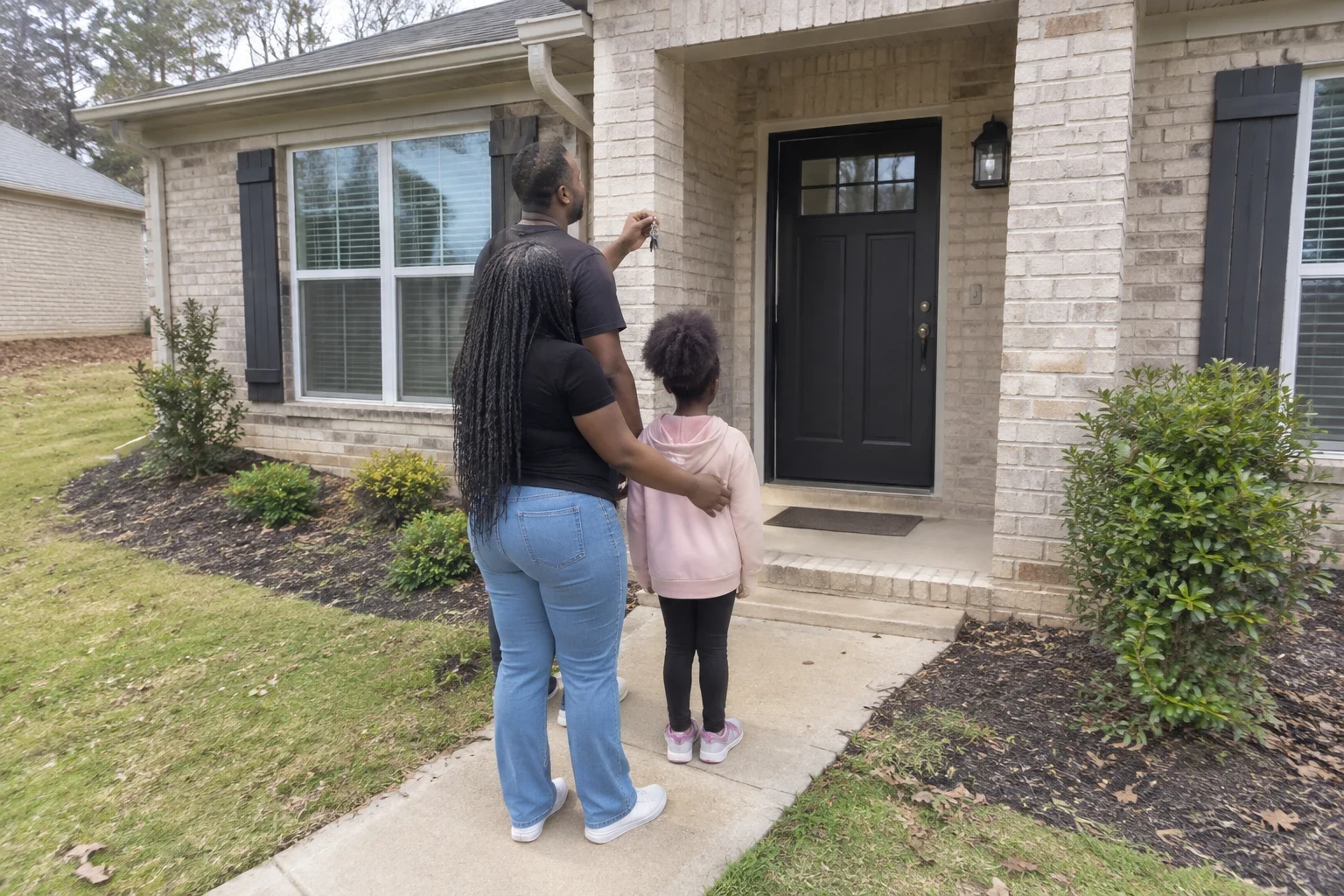
See your break-even number first
Bring your current mortgage statement to a free consultation. A loan officer will tell you whether refinancing pays off for you, and if it does not, we will say so.