ServicesReverse Mortgages
Reverse Mortgages in South Fulton
At 62 or older, the equity you have built can be converted into a lump sum, a monthly draw or a credit line, with no monthly mortgage payment required. We show what you could access, the bills you still carry and how the loan is settled down the road.
How a reverse mortgage works and who it suits
The usual version is the Home Equity Conversion Mortgage, or HECM, which follows FHA rules. You do not make a monthly payment to the lender. Instead, interest and mortgage insurance are added to the loan balance over time. The loan is repaid when the last borrower sells, moves out for good or passes away.
It makes sense if you plan to stay for many years, your income is tight compared with your equity, and you can keep paying property taxes, insurance and upkeep. It makes less sense if you may move in a few years, because the upfront costs need time to pay off. In that case a home equity loan or HELOC, or a cash-out refinance, may cost less, and we will tell you that directly.

What we handle on a reverse mortgage
- 01
Your principal limit, calculated
Three inputs set it: the age of the youngest person on the loan (a younger eligible spouse counts), the expected rate, and the appraised value up to the FHA lending limit. Older ages and lower rates open up a larger share of that value.
- 02
Payout choices compared
You can take a fixed-rate lump sum, steady monthly draws that last as long as you live there or for a chosen number of years, a credit line, or a combination. Any unused portion of a HECM credit line grows over time, which is why many borrowers keep one in reserve.
- 03
Paying off a current mortgage
A first mortgage still on the property must be cleared at closing. We show the amount left after that payoff, so you know what you can really spend.
- 04
Financial assessment and set-asides
HUD requires a review of your credit, income and history of paying property charges. If gaps turn up, part of the proceeds may go into a Life Expectancy Set-Aside to cover future taxes and insurance. We tell you about this before you apply.
- 05
Counseling coordination
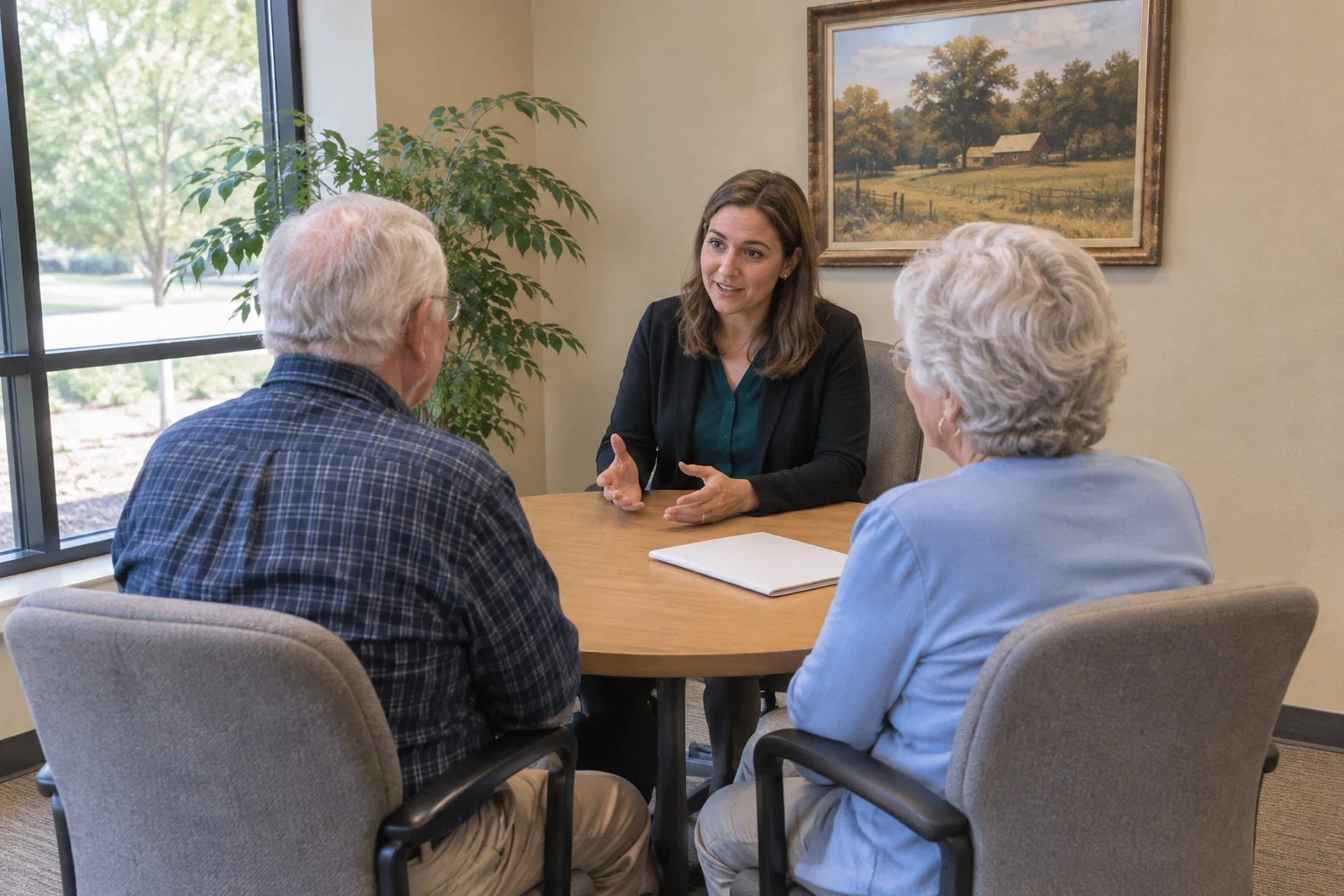
Every HECM borrower meets with a HUD-approved counselor who is independent of us. We give you the agency list and move your file forward the day the certificate arrives.
- 06
HECM for Purchase
Moving at 62 or older? A HECM for Purchase combines your down payment with reverse mortgage funds, so the new place carries no monthly mortgage payment.
Questions about Reverse Mortgages?
Call(404) 671-4981Signs a reverse mortgage deserves a look
The mortgage payment strains your income
Retirement checks stay flat while the payment keeps coming due. Swapping that payment for a reverse mortgage frees monthly cash and lets you stay where you are.
Most of your wealth is in the property
Little in savings, a lot in equity. A reverse mortgage puts that equity to work without a sale or a new monthly bill.
You want money held in reserve
Set up a HECM credit line sooner rather than later and the part you leave alone keeps growing. Later it can cover a new roof, a car or a rough market year so you are not selling investments at a loss.
Care costs are climbing
Home aides and medical bills pile up quickly. Monthly reverse mortgage draws can pay for them and help you stay in place longer.
You plan to downsize after 62
Many people sell and buy something smaller at this point. A HECM for Purchase reduces the cash you bring and drops the monthly payment on the new place.
How a reverse mortgage moves to closing
- 1
Free consultation by phone
A loan officer calls you back when it suits you and asks about ages, the rough property value, any loan balance and what the money is for. By the end you have an estimated principal limit and an honest read on whether it fits.
- 2
HUD-approved counseling
You meet with an independent counselor, most often by phone. The session walks through costs, your ongoing duties and other options, and ends with the certificate your application requires.
- 3
Application, appraisal and review
An FHA appraiser determines the value and flags any health-and-safety items to be fixed before or after closing. Meanwhile we complete the financial assessment of credit, income and property charges.
- 4
Underwriting and closing
Underwriting checks the figures and sets any conditions, and then you sign. Since the loan covers your primary residence, you get three business days to cancel before any money is released.
What moves the cost of a reverse mortgage
HUD rules and the property's value set most reverse mortgage costs, so there is little to haggle over. Almost every charge can be rolled into the loan, which means it is paid from equity rather than from your savings on closing day. Here is what raises or lowers the numbers.
- Appraised value and the FHA limit
- The upfront FHA mortgage insurance premium is a fixed percentage of the value, counted up to the lending limit. The origination fee also rises with value, and HUD caps it.
- Fixed or adjustable rate
- Choosing a fixed rate locks you into one lump-sum draw. An adjustable rate opens up monthly payments and a credit line. Either way, the rate shapes your principal limit and the pace at which the balance climbs.
- Yearly insurance and interest
- Both accrue on whatever balance is outstanding. Draw more and the balance compounds faster.
- Outside fees
- The appraisal, title insurance, recording charges and counseling fee go to third parties. Each one shows up as its own line on the loan estimate we send, so the closing figures hold no surprises.
- Your first-year draw
- HUD caps how much you can take in the first twelve months unless the funds clear an existing mortgage. Taking less up front keeps the interest and insurance charges lower.
Answers to the reverse mortgage questions callers ask
Who owns the property once the reverse mortgage closes?
You do. Title stays in your name, and the lender simply records a lien, the same way any mortgage lender does. In return you agree to live there as your main residence, keep property taxes and the dwelling's insurance policy paid, and maintain the place.
What happens for my heirs?
The loan comes due after the last borrower passes away. Heirs can sell, pay off the balance and keep the property, or settle for 95 percent of the appraised value if the balance has grown past that. Because HECMs are non-recourse, nobody owes more than the property is worth.
Does a reverse mortgage change my Social Security or Medicare?
No. The funds count as loan proceeds, not income, and generally are not taxed. Needs-based programs such as Medicaid or SSI can be affected if money stays in an account past the month you receive it, so check with a benefits advisor before drawing.
My spouse is under 62. Can we still qualify?
In many cases, yes. A younger spouse can be named as an eligible non-borrowing spouse and may remain in the property after the borrower dies, provided HUD's conditions are met. The younger age lowers the principal limit, and we run that exact figure for you.
Can I get one if I still owe on my mortgage?
Yes, if there is enough equity. The reverse mortgage pays off the current loan at closing, and whatever remains under your principal limit is available for you to draw.
Get the real numbers before you decide
A loan officer will call you back, run your principal limit and lay out costs and payout options side by side. Borrowers across South Fulton, Fairburn and Union City meet with us by phone, by video or at our office.